What is global mental health?
Established in 2012 following a landmark conference, the Norwegian network has grown alongside the rising global focus on mental health, later joining with other Nordic partners in 2022 to deepen regional collaboration and advance a shared agenda in humanitarian and fragile contexts.
Global mental health (GMH) is a holistic approach that combines various fields, including psychology, psychiatry, nursing, humanitarian and developmental work, social work, education, and public health, to address the mental well-being of people worldwide. GMH combines the power of these fields to drive impactful practice, advocacy, research and innovation across silos and borders in an effort to collaboratively address the rising global burden of mental health.
With a goal to address disparities and gaps in the different health systems, utilizing collaboration and knowledge sharing as key components. Resources are still unevenly distributed across the world leaving many health systems under extra pressure or incapable of addressing the need in their community, region or country. Especially in humanitarian and fragile settings with human- or nature-made disasters causing mass-trauma to the population or destabilizing health structures, leaving an increased burden of care. Until the root causes of this inequality is addressed, these health structures need additional support. The field of Mental health and psychosocial support (MHPSS) was formed to address this burden across sectors and fields.
Mental health is a human right often forgotten or neglected
One of the central issues in global mental health is the widespread stigma that surrounds mental illness. In many communities, high levels of stigma lead to silence and isolation, preventing individuals from seeking help or expressing vulnerability. This stigma is often reinforced within health systems, where people may face rejection or inadequate support, further discouraging access to care. Similar experiences of exclusion within families and communities can deepen feelings of loneliness and despair.
To address this, it is essential to prioritise advocacy and awareness-raising efforts, while also ensuring that policies and legislation do not reinforce the stigma.
Mental health - the smart investment
Despite the percentage of the total health burden, mental health gets less than 2 % of health budgets allocated towards MH or GMH activities. Social psychologists, economists and researchers emphasize the massive return on investment when investing in preventive measures, such as mental health is considered to be in countering the leading root causes in society. Investing in people’s mental and emotional well-being is fundamental to building communities and societies that are resilient, inclusive, and sustainable. Creating a society in which people`s emotional, physical and psychological needs are met enables them to contribute to the well-being of others, a principle long recognised in frameworks such as Maslow’s hierarchy of needs.
Mental health included in the response to non-communicable diseases (NCDs)
Mental health should be included in the response to Non-communicable diseases because they are closely interlinked, both epidemiologically and in terms of their impact on individuals and health systems globally. Large-scale studies such as the “World Mental Health Surveys” show strong associations between common mental disorders, such as depression, anxiety, and post-traumatic stress disorder, and physical conditions like cardiovascular disease, diabetes, cancer, and respiratory illnesses. There is also robust evidence linking adverse childhood experiences to increased risk of both mental and physical health problems later in life.
In many parts of the world, especially in low- and middle-income contexts, health systems are often poorly equipped to respond to this dual burden. Mental disorders often lead to greater functional impairment than physical conditions, yet continue to receive less attention, lower funding, and higher stigma. At the same time, multimorbidity, when mental and physical conditions occur together, is increasingly the norm, not the exception. This combination is associated with worse outcomes, higher mortality, greater costs, and lower quality of life.
Shared risk factors, such as poor nutrition, physical inactivity, tobacco and alcohol use, are higher among individuals with mental health challenges, and their effects tend to be cumulative and reinforcing.
In light of this, it is essential to integrate mental health into the prevention and treatment of NCDs, rather than treating them in isolation. A more holistic approach will not only improve health outcomes and reduce disability, but also promote equity, reduce stigma, and ensure a fairer distribution of health resources across countries and regions across the world.
Who are we?
The Norwegian Network for Global Mental Health (est. 2012) is an engaged network managed by a working committee, facilitating a common professional platform to focus on, discuss and share reflections concerning GMH. The network consists of representatives from civil society organizations, humanitarian organizations, researchers, professionals and private individuals who are engaged in mental health and development work globally.
The network aims to raise global mental health higher on the agenda, and to collaborate and learn from each other across the globe. It wants to hold space for diverse perspectives and drive the conversation as a collective on how to address the global mental health challenges together.
The main activity is knowledge and information sharing through the open network meetings, small and larger events (including Arendalsuka), and newsletters, plus the social media group. In addition the network supports small and larger professionally oriented events as main or co-hosts. The newsletters are intended to be a source of inspiration, for the members to learn from each other's experiences, but also to raise concerns or attention on causes deemed important by the network members. The content can be anything from mental health projects, new studies, insights, articles, relevant events or exciting actors and projects. This website functions as a library and hub of the main material and resources from the network's activities.
The network is managed by its working group consisting of members given extra responsibility to the network in support of the coordinator and leader. The working groups main tasks vary, including helping to determine topics for the open network's meetings, lectures and programs, to coordinate and host the same. The group also works on influencing more directly, such as input to the Ministry of Foreign Affairs, Ministry of Health and Norad, on policy and visibility of global mental health. The committee works together to promote global mental health and keep the network engaged and active.
The current working committee is:
- Heidi Westborg Steel, Director ICDP Norway and Ragnhild Dybdahl, Associate Professor at UiB/senior advisor at FHI (co-leads)
- Ingeborg Arntsen, psychologist specialist (coordinator)
- Rune Drotninghaug, pscyhology student (Technical support)
- Staale Stavrum, Utenlandssjef FORUT
For larger projects or specific activities smaller groups have been created to work on specific topics and tasks when necessary, also consisting of people outside the working group itself.
If you would like to join or contribute to the network, do not hesitate to get in touch!

History
The Norwegian network was established in 2012, as a result of the engagement at the conference "Mental health in a global perspective" organized by HimalPartner with funding from Digni/Norad. HimalPartner organized a similar conference in 2018 ("Mental health - a key to development?"), which helped the network to further strengthen and campaign for new members.
Today the network consists of 28 organizations ranging from large global humanitarian actors like NRC, Save the Children, The Red Cross, institutions like NTNU, The Norwegian Institute of Public Health, and to mental health focused organizations like HimalPartner, Forut, ICDP Norway, The Human Aspect, MHHRI.
The Nordic network was established in 2022 initiated by War Child Sweden that was joined by International Child Development Programme (ICDP) Norway, IFRC Reference Centre for Psychosocial Support (PS Centre), MHPSS Collaborative, and Save the Children Denmark, with the goal to host a Nordic conference to create an aligned vision and roadmap for global mental health work in fragile and humanitarian settings. The Norwegian Network joined the other networks in the other Nordic countries to join the Nordic network, with the objective to increase collaboration and knowledge sharing across the Nordics.

The Nordic network hosted the first conference in Copenhagen Denmark on 29-30th of August 2022 attended by 120 delegates representing more than 60 organizations and actors. The conference was divided into 4 tracks Innovation and Digitalisation, Climate crisis, Gender and integration of mental health and psychosocial support in health systems, to highlight key areas within GMH. The conference's main objective was to lay the groundwork for "The Nordic Roadmap for MHPSS 2022-2030”, through a series of panels, workshops and conversations. Making the roadmap the guiding document on GMH for the Nordic member organizations. A powerful tool to unite their efforts in the coming years with an aligned strategy and direction, especially on advocacy and political work. The Road Map is intended to be a living document, reassessed and updated every other year in relation to evolving needs and realities identified by Nordic MHPSS network members and stakeholders.
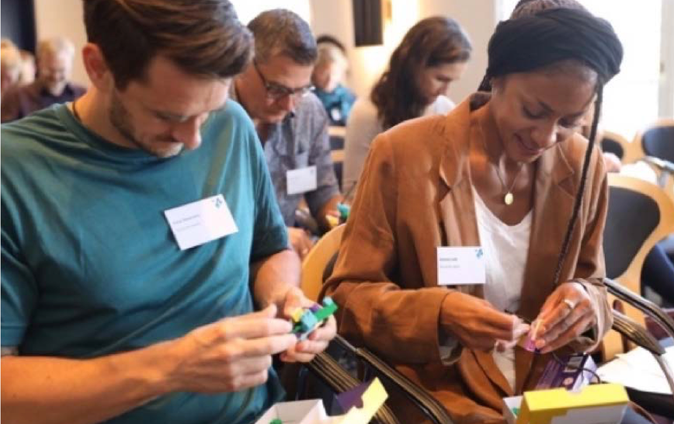
The conference was followed by a 2nd Nordic conference on MHPSS in fragile and humanitarian settings in Malmø, Sweden in March 2024, focusing on re-aligning the organizations, sharing experiences and insights to continuing the collaborative work on achieving the goals in the road map. Similar to the 1st conference Malmø was divided into 4 tracks Digitalisation & Innovation, Climate, Gender and Integration to highlight 4 key areas within GMH.
In 2026, Oslo, Norway is the host of the 3rd Nordic conference that will be happening at Oslo Metropolitan University, following a turbulent, and narrative shifting year (2025). A year with massive budget cuts and withdrawal of funding from the US to field projects and humanitarian organizations, combined with an uprising from local actors to transform the entire humanitarian system. Find more information and possibility to sign up here (hyperlink til event